Apprenticeship Model: Career Pathways – Four-Tier Internship System
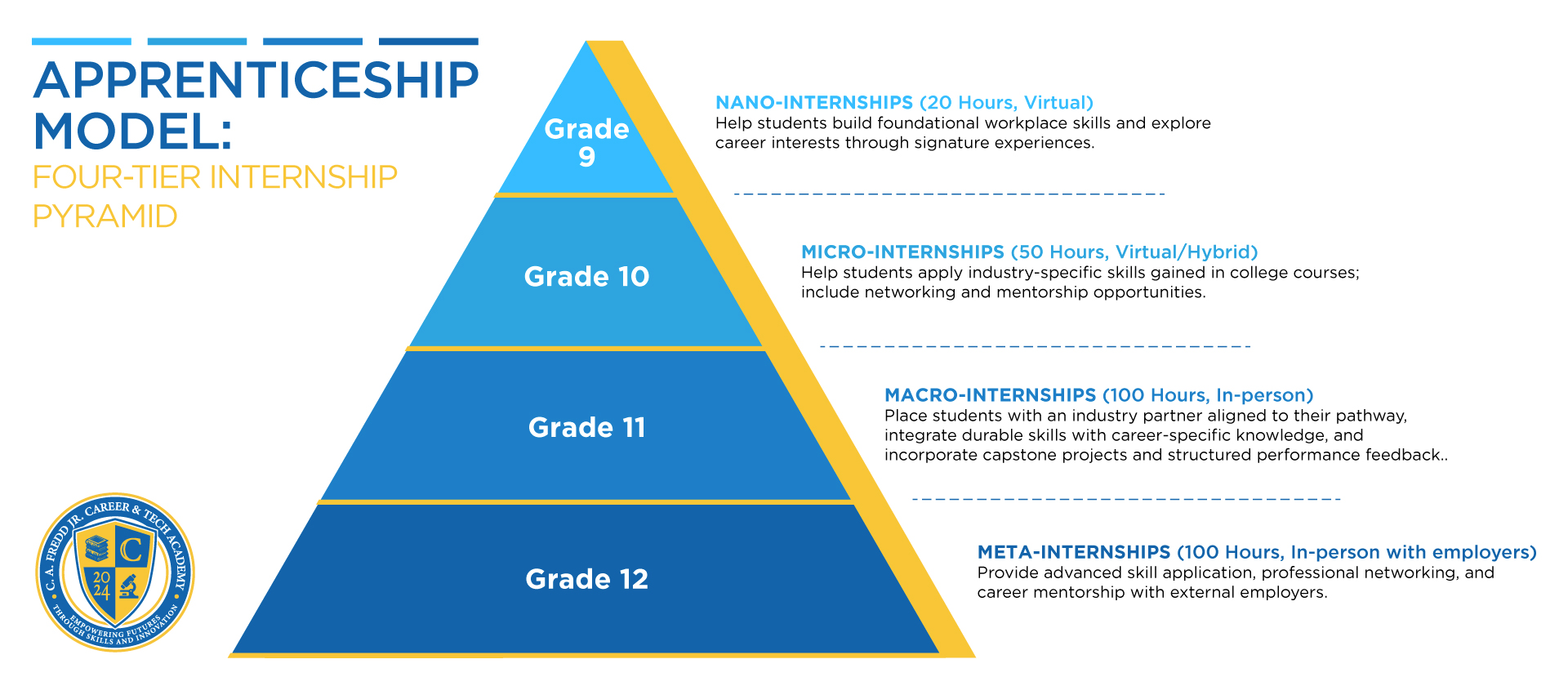
The Apprenticeship Model is a structured, progressive internship system designed to guide students through a sequence of increasingly complex career experiences, allowing them to develop foundational workplace skills, technical expertise, and professional networks before entering the workforce or postsecondary education. Each tier builds on the previous year’s experiences, ensuring continuous growth in career readiness, technical proficiency, and self-awareness.
Overall Model Benefits:
- Structured progression ensures cumulative skill development across four years.
- Balanced integration of virtual and in-person experiences prepares students for modern work environments.
- Exposure to mentorship, networking, and performance feedback strengthens career readiness.
- Real-world projects and capstone experiences cultivate problem-solving, critical thinking, and professional identity.
- Graduates leave with both practical experience and professional connections, positioning them for success in post-secondary education or immediate employment.
Grade 9 – Nano-Internships (20 Hours, Virtual)
In their first year, students participate in short, 20-hour virtual “nano-internships” aimed at cultivating foundational workplace competencies and helping them explore a variety of career pathways. These signature experiences introduce students to professional expectations such as communication, time management, teamwork, and digital collaboration. Activities include virtual workplace simulations, industry-based projects, and guided reflection exercises to help students begin shaping their career identity. At this stage, emphasis is placed on self-discovery, career exploration, and building confidence in professional interactions. Students receive structured feedback from mentors and facilitators to reinforce learning and guide future career planning.
Grade 10 – Micro-Internships (50 Hours, Virtual/Hybrid)
Sophomore students advance to 50-hour “micro-internships” where they begin applying industry-specific skills aligned with their academic coursework or CTE focus. These internships provide virtual or hybrid exposure to professional environments and are designed to deepen students’ understanding of workplace expectations within particular career fields. Students engage in networking activities, professional mentorship sessions, and collaborative projects that mirror authentic industry challenges. This tier emphasizes skill application, professional communication, and critical thinking, with measurable outcomes tied to performance assessments, mentor evaluations, and reflection journals.
Grade 11 – Macro-Internships (100 Hours, In-Person)
Junior students participate in 100-hour, in-person “macro-internships” with an industry partner of an aligned pathway. These experiences integrate durable workplace skills with specialized career knowledge, enabling students to engage in real-world problem solving and contribute meaningfully to community and organizational goals. Internships include hands-on projects, cross-functional collaboration, and capstone assignments that allow students to demonstrate both technical and professional competence. Structured performance feedback from supervisors, mentors, and educators helps students refine their skills, identify strengths, and address growth areas while fostering accountability and career discipline.
Grade 12 – Meta-Internships (100 Hours, In-Person with External Employers)
In their senior year, students participate in 100-hour “meta-internships” with external employers in industries aligned with their career interests. These high-level internships emphasize advanced skill application, professional networking, and career mentorship. Students are expected to contribute to organizational objectives, demonstrate initiative, and apply both technical and soft skills in authentic professional contexts. Activities may include leading projects, participating in strategic planning sessions, and engaging with multi-level teams. Meta-internships culminate in a professional portfolio showcasing achievements, reflective evaluations, and career readiness certifications. By the end of this tier, students have developed a robust professional network, a clear understanding of workplace culture, and tangible experience that enhances postsecondary or career pathways.